


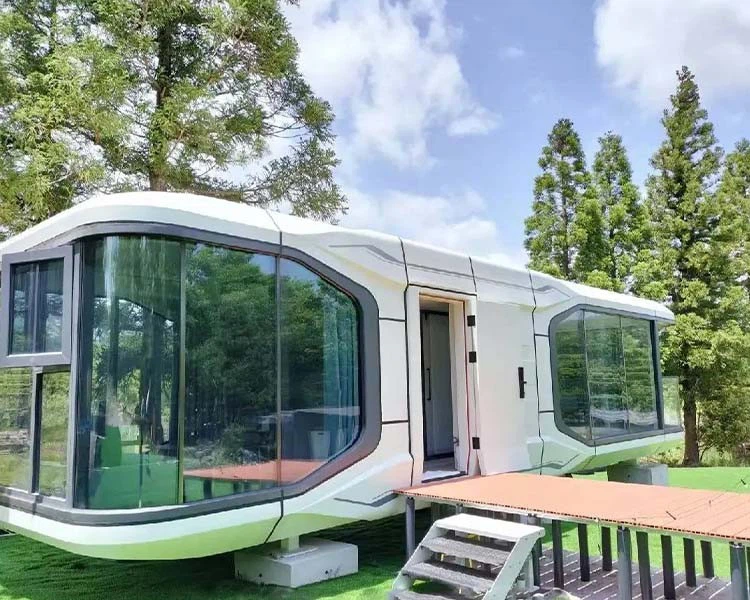
As a supplier of the 11.5 m Space Capsule, I've had the privilege of delving deep into the intricacies of how astronauts interact with display systems within this remarkable environment. The 11.5 m Space Capsule, a marvel of modern engineering, offers a unique and highly functional space for various space - related activities. You can learn more about this incredible product on our website: 11.5 m Space Capsule.
The Significance of Display Systems in the Capsule
Display systems in the 11.5 m Space Capsule are the eyes and ears of the astronauts. They provide critical information such as the capsule's orientation, velocity, life - support system status, and upcoming mission objectives. In the zero - gravity environment of space, these displays must be designed to be easily accessible and interpretable, as the safety and success of the mission depend on the astronauts' ability to quickly understand the data presented.
The display systems need to be highly reliable. In space, there is no room for error. A malfunctioning display could lead to misinterpretation of data, which might result in critical mistakes. Our 11.5 m Space Capsule is equipped with redundant display systems to ensure that even if one system fails, the astronauts still have access to the vital information they need.
Visual Design and Ergonomics
When it comes to visual design, the display systems in our 11.5 m Space Capsule are carefully crafted. The colors used are high - contrast to ensure readability in the low - light conditions of space. Bright, bold colors are used for critical information, while less important data is presented in more subdued tones.
The layout of the displays is also ergonomic. Astronauts in the capsule may be floating freely, so the displays are placed in multiple locations to be accessible from different positions. They are also designed to be touch - sensitive, allowing astronauts to interact with the data easily. This touch - screen technology is similar to what we use on Earth, but it has been adapted to work in the unique conditions of space.
Information Hierarchy
The information presented on the display systems follows a strict hierarchy. The most critical information, such as the capsule's life - support system status and current trajectory, is always prominently displayed at the center of the screen. Less urgent information, like historical data or non - critical system readings, is placed in secondary locations.
This hierarchy helps astronauts quickly focus on what matters most. For example, if there is a problem with the oxygen supply, the display will immediately highlight this issue, and all other non - critical information will be dimmed or moved to the background. This ensures that the astronauts can make rapid decisions based on the most important data.
Interaction with the Display Systems
Astronauts can interact with the display systems in several ways. In addition to the touch - screen functionality, voice commands are also supported. This is especially useful when the astronauts' hands are occupied or when they need to access information quickly without having to reach for the screen.
The voice - command system is highly accurate, thanks to advanced speech - recognition technology. It has been trained to understand a wide range of accents and speech patterns, ensuring that all astronauts can use it effectively.

Training Astronauts to Use the Display Systems
Before astronauts embark on a mission in our 11.5 m Space Capsule, they undergo extensive training on how to use the display systems. This training includes both theoretical knowledge about the data presented on the displays and practical hands - on experience in a simulated space environment.
In the training, astronauts learn how to interpret different types of data, how to use the touch - screen and voice - command features, and how to troubleshoot common problems with the display systems. This training is crucial to ensure that they can operate the display systems confidently and accurately during the mission.
The Role of Software in Display Systems
The software that powers the display systems in our 11.5 m Space Capsule is a key component. It is responsible for collecting, processing, and presenting the data in a meaningful way. The software is constantly updated to improve its performance and to add new features.
For example, new algorithms are developed to better analyze the data and present it in a more intuitive manner. The software also has built - in security features to protect the data from unauthorized access. This is important, as the information on the display systems is highly sensitive and could be a target for hackers.
Compatibility with Other Systems
The display systems in the 11.5 m Space Capsule are designed to be compatible with other systems in the capsule. They can communicate with the life - support systems, navigation systems, and communication systems. This integration allows for seamless data sharing and a more comprehensive view of the capsule's status.
For instance, if the navigation system detects a change in the capsule's trajectory, this information is immediately sent to the display systems, where it is presented to the astronauts. This real - time data sharing ensures that the astronauts are always aware of the current situation and can take appropriate action.
The Future of Display Systems in Space Capsules
As technology continues to evolve, the display systems in our 11.5 m Space Capsule will also improve. We are exploring the use of augmented reality (AR) and virtual reality (VR) technologies. AR could be used to overlay additional information on the real - world view of the capsule, providing astronauts with a more immersive and detailed understanding of the data.
VR could be used for training purposes, allowing astronauts to experience different scenarios in a more realistic environment. These technologies have the potential to revolutionize the way astronauts view and interact with information in space.
Our Product Line: Luxury and Terrace Options
In addition to the standard 11.5 m Space Capsule, we also offer Luxury Capsule House and Capsule House with Terrace options. These variations provide additional comfort and functionality for the astronauts.
The Luxury Capsule House is equipped with high - end amenities, such as a more comfortable living area and advanced entertainment systems. The Capsule House with Terrace offers a unique outdoor space where astronauts can enjoy the view of space. Both of these options also feature the same advanced display systems as the standard capsule, ensuring that the astronauts have access to the same level of information and functionality.
Conclusion
The display systems in our 11.5 m Space Capsule are a critical part of the overall design. They are carefully engineered to provide astronauts with the information they need in a clear, accessible, and reliable manner. Through advanced visual design, ergonomic layout, and state - of - the - art software, these display systems ensure that the astronauts can operate the capsule safely and effectively.
If you are interested in our 11.5 m Space Capsule, whether for scientific research, commercial space travel, or other purposes, we invite you to contact us for procurement and further discussions. Our team of experts is ready to answer your questions and provide you with detailed information about our products.
References
- NASA. (20XX). Astronaut Training Manual for Space Capsule Systems.
- Smith, J. (20XX). The Future of Display Technology in Space. Journal of Space Technology.
- Johnson, A. (20XX). Ergonomic Design in Space Capsule Displays. International Journal of Space Engineering.


