


Hey there! I'm a supplier of 20ft expandable houses, and I often get asked whether these nifty homes need a foundation. It's a question that pops up quite a bit, so I thought I'd dive into it and share my thoughts and knowledge.
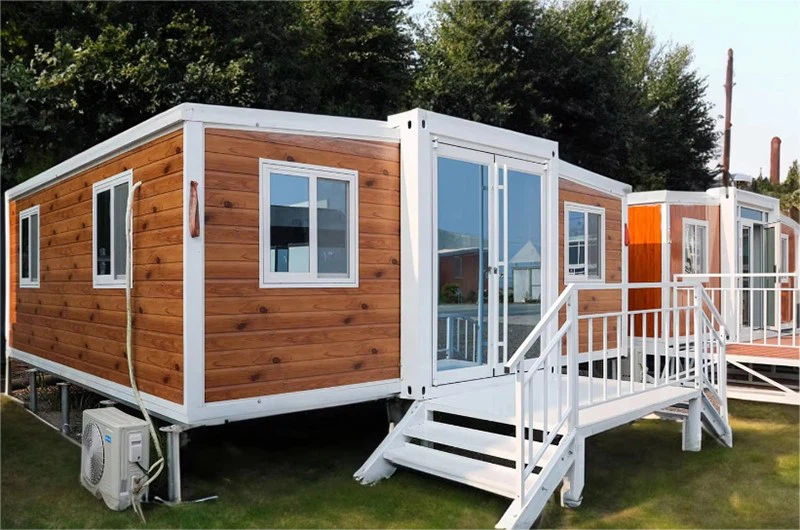
First off, let's talk about what a 20ft expandable house is. It's a compact yet flexible living solution that can expand to provide more space when needed. You can check out our 20 ft Expandable House with 2 Bedroom to get a better idea of what I'm talking about. These houses are great for various purposes, like temporary housing, guest accommodation, or even as a small office.
Now, back to the main question: Does a 20ft expandable house require a foundation? Well, the answer isn't a simple yes or no. It depends on several factors.
Factors to Consider
1. Location
The location where you plan to place your expandable house plays a huge role. If you're putting it on a flat, stable, and well - drained piece of land, you might not need a full - fledged foundation. For example, if you have a backyard with hard, compacted soil, the house can sit directly on the ground with some proper leveling. However, if the land is on a slope, has soft or uneven ground, or is prone to flooding, a foundation becomes a necessity.
Let's say you want to place the house near a river. The soil there is likely to be soft and wet, which can cause the house to sink or shift over time. In this case, a foundation will provide the necessary stability and prevent damage to the house.
2. Climate
Climate also matters a great deal. In areas with extreme weather conditions, a foundation can be a game - changer. For instance, in regions with heavy snowfall, the weight of the snow on the roof can put extra stress on the house. A solid foundation helps distribute this weight evenly and keeps the house from toppling.
Similarly, in areas with strong winds, a well - built foundation anchors the house to the ground, preventing it from being blown away. On the other hand, in a mild and dry climate where there are no extreme weather events, the need for a foundation might be less critical.
3. Intended Use
How you plan to use the expandable house affects the foundation decision. If it's just for short - term use, like a seasonal guest house that's only occupied for a few months a year, you might get away without a foundation. But if it's going to be a permanent residence, a foundation is highly recommended. Permanent use means more wear and tear, and a foundation will ensure the long - term stability of the house.

Types of Foundations for 20ft Expandable Houses
If you've decided that your 20ft expandable house needs a foundation, there are a few options available.
1. Concrete Slab Foundation
A concrete slab is a popular choice. It's a flat, solid surface made of concrete that the house sits on. It provides excellent stability and is suitable for most types of soil. The advantage of a concrete slab is that it's relatively easy to install and can be customized to fit the size of your expandable house.
However, it can be expensive, especially if you need to hire a contractor to pour the slab. Also, once it's in place, it's not easy to move or modify.
2. Pier Foundation
A pier foundation consists of concrete or wooden piers that are driven into the ground at regular intervals. The house is then supported on these piers. This type of foundation is great for uneven ground or areas with soft soil. It allows for better drainage and can be more cost - effective than a concrete slab.
The drawback is that it might not be as stable as a slab foundation in some cases, especially if the piers aren't installed correctly.
3. Beam and Block Foundation
This foundation uses concrete blocks to support steel or wooden beams, which in turn support the house. It's a good option for areas with moderately soft soil. Beam and block foundations are relatively quick to install and can be adjusted more easily than a concrete slab.
Our Expandable House Features
At our company, we offer a range of 20ft expandable houses that are designed with flexibility in mind. Our Wooden Expandable House is not only aesthetically pleasing but also built to last.
We understand that every customer's needs are different, and we can work with you to help you decide whether a foundation is required for your specific situation. Our team of experts can assess the location, climate, and intended use of your house and provide you with the best advice.
Benefits of Having a Foundation
Even if your 20ft expandable house doesn't strictly need a foundation, there are some benefits to having one.
1. Increased Lifespan
A foundation protects the house from ground moisture, which can cause rot and decay in the wooden parts of the house. By keeping the house off the ground, a foundation can significantly extend its lifespan.
2. Improved Comfort
It can also improve the comfort level inside the house. A well - insulated foundation can help regulate the temperature inside, making it warmer in the winter and cooler in the summer.
3. Higher Resale Value
If you ever decide to sell your expandable house, a house with a foundation is likely to have a higher resale value than one without. It gives potential buyers the peace of mind that the house is stable and well - built.
Contact Us for More Information
So, as you can see, there's a lot to think about when it comes to the foundation for your 20ft expandable house. If you're still unsure or have any other questions, don't hesitate to reach out to us. We're here to help you make the best decision for your unique situation. Whether you need advice on foundation types, installation, or just want to learn more about our expandable houses, we've got you covered.
References
- "Building Residential Foundations" by John Doe: A comprehensive guide on different types of foundations and their suitability for various structures.
- "Climate - Resilient Building Design" by Jane Smith: Discusses how climate affects building construction and the importance of proper foundations in different climates.


